

Victor BED
International News Desk
Sribna Zemlya Newspaper
September 11, 2025
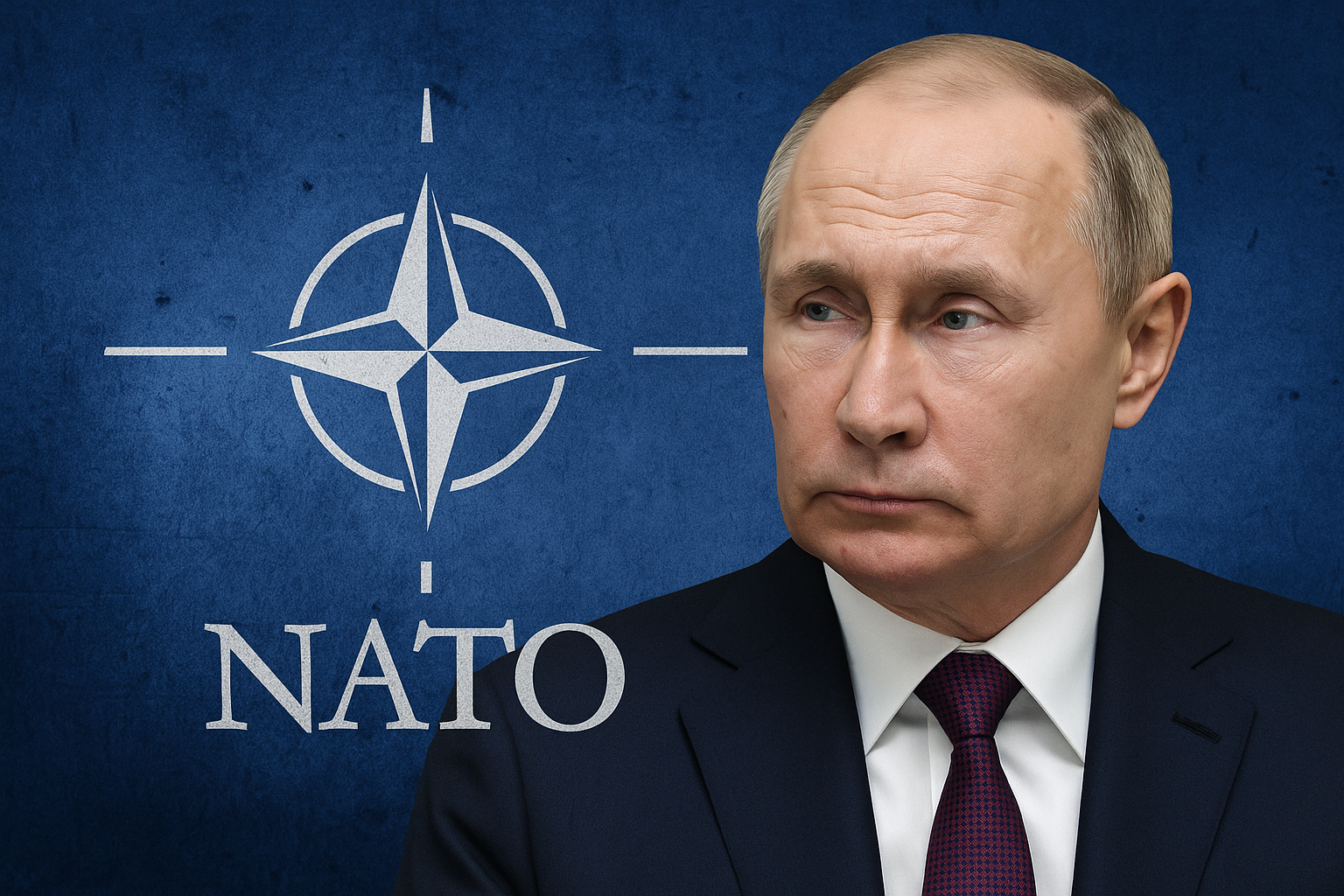
The latest violation of Polish airspace by Russia, when dozens of drones crossed into the territory of a NATO member state and were shot down by Polish and allied air defense forces, has become a serious signal to the entire democratic world. This is not merely a technical incident but an open test of the determination of the EU, the United States, and NATO.
At the same time, Vladimir Putin’s visit to China from August 31 to September 3, 2025, his participation in the September 3 parade in Beijing alongside Xi Jinping and Kim Jong Un, as well as negotiations with Iran, confirmed that the Kremlin’s aggressive policies have both ideological and political allies within the so-called “authoritarian club.”
What Happened
On September 10, 2025, Poland reported at least nineteen drones that entered its airspace during a massive Russian attack on Ukraine. This marked the first time since the beginning of the full-scale war that a NATO member state opened fire on Russian targets over its own territory. The Polish Air Force, supported by allied aircraft and ground-based air defense systems, swiftly neutralized the threat.
Prime Minister Donald Tusk called the incident a “large-scale provocation” and initiated consultations under NATO’s Article 4. In response, the Alliance and the EU confirmed the violation, emphasized unity, and mobilized additional forces to strengthen the eastern flank’s defense.
Moscow predictably denied any intent to attack Poland, while Minsk even claimed that “the drones veered off course due to electronic warfare.” This is yet another example of manipulation and avoidance of responsibility.
Assessing the Incident
At first glance, the Kremlin lost. Its drones were destroyed, Poland and NATO responded promptly, and the Alliance demonstrated unity. The West sent a clear message that such provocations will not go unanswered.
However, from a strategic perspective, Putin achieved his goal. He tested NATO’s readiness, forced allies to expend resources, temporarily disrupted air traffic, and created an atmosphere of threat. This is a blatant disregard for international law and a cynical show of force: the Kremlin demonstrates that it can violate NATO borders and still hope to avoid direct escalation.
That is why the statement by former British officer Toby Dickinson that Putin’s attempt “failed” seems overly optimistic. Yes, the military outcome was negative for the Kremlin, but the political and psychological game continues — and it is precisely in this domain that Moscow seeks to prevail.
Geopolitical Context
The incident in Poland occurred immediately after Putin’s visit to China (August 31 – September 3, 2025). Together with Xi Jinping and Kim Jong Un, he took part in a military parade in Beijing on September 3. The very fact of three dictators jointly attending such an event sent a signal to the world: a political and military-economic alliance is forming, openly directed against the West.
Iran also joins this “authoritarian club,” already supplying Russia with weapons and technology for its war against Ukraine. Analysts note that although economic interaction among these regimes remains limited and uneven, it nonetheless creates a “safety cushion” for Russia’s war economy and fuels its aggression.
Forecasts
Russia will continue probing the “gray zone” of security, using drones, missiles, and other cheap means of pressuring NATO’s neighboring states. Similar incidents may occur again in Poland, the Baltic States, and Romania.
In response, allies will strengthen air defense and interception procedures. In the coming months, one can expect the deployment of additional Patriot, IRIS-T, and SAMP-T systems on the eastern flank, as well as more frequent NATO air patrols.
At the same time, the EU and the US will accelerate sanctions against Russia’s military-industrial complex and its intermediaries in China, North Korea, and Iran. One priority will be shutting down supply channels for drone components.
Recommendations
Ukraine and its allies must act more decisively:
1. Joint Air Defense Shield – A shared air defense umbrella over Ukraine’s western regions and NATO’s border territories is essential. This would allow drones to be intercepted before entering EU airspace.
2. Counter-Drone Programs – Joint initiatives to counter unmanned threats should be intensified, with integrated monitoring and data-sharing systems between Ukraine and NATO states.
3. Expanded Sanctions – Sanctions must cover the entire supply chain — from producers to intermediaries and carriers in third countries.
Most importantly, it must be understood that strengthening Ukraine militarily and in terms of armaments by the EU, the US, other democratic states, and NATO is simultaneously strengthening the security of the EU itself and the democratic world. The faster Ukraine is admitted to the European Union, the more strategically advantageous it will be for both the EU and NATO.
Conclusion
Putin has not abandoned war as an instrument of policy. His arrogance has only grown after his visit to China. He shows contempt for international law and tries to impose on the world the logic of brute force and impunity.
At the same time, NATO’s unity, Poland’s swift response, and allied support demonstrated that the Kremlin cannot act with total impunity. Yet this is not enough. Only systematic strengthening of Ukraine and its integration into European and Euro-Atlantic structures can become a real shield for Europe and the entire democratic world.
Sources
- Reuters — Poland downs Russian drones in its airspace, becoming first NATO member to fire during Ukraine war, September 10, 2025.
- Reuters — How united is the ‘autocratic alliance’ challenging the West?, September 10, 2025.
- AP News — A summit and parade in China may signal a geopolitical shift, September 3, 2025.
- Reuters — Xi hosts ‘old friend’ Putin, Kim ahead of military parade, September 2, 2025.
- Official website of the President of Russia (Kremlin.ru) — report on Putin’s visit to China, August 31 – September 3, 2025.